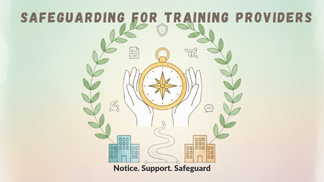

This course introduces safeguarding within the specific context of apprenticeships, where learners operate across both a training provider and an employer environment. Safeguarding in apprenticeships goes beyond classroom observation; it includes workplace culture, online spaces, travel, wellbeing, and wider life circumstances.
The course explains the practical responsibilities of education staff in preventing harm, identifying concerns early, and supporting apprentices appropriately. Rather than focusing on memorising policies, it develops everyday professional habits: noticing changes, listening carefully, recording concerns accurately, and sharing information with the Designated Safeguarding Lead (DSL) at the right time.
Through realistic workplace scenarios, staff will understand how safeguarding concerns may present subtly ,through behaviour, attendance, language, relationships, or wellbeing, and how a calm, proportionate response can prevent situations from escalating.
The course also clarifies the Prevent duty, safer recruitment, online safety risks, and the importance of partnership between provider and employer. It emphasises that safeguarding is not about investigation, but about early awareness, professional curiosity, and appropriate referral.
Apprenticeships create a dual environment: learners move between education and employment. Because of this, risks do not always appear in obvious ways.
Learners may:
struggle with workplace relationships
experience bullying or discrimination
face online harm
encounter unsafe practices
experience isolation, financial pressure, or exploitation
become vulnerable to extremist influence
Training providers play a critical role in early identification and support. A consistent safeguarding culture helps apprentices feel safe enough to speak up and ensures concerns are addressed before harm develops.
By the end of this course, staff will be able to:
Understand safeguarding responsibilities within apprenticeship provision
Recognise different types of harm affecting apprentices
Identify early warning signs through behaviour and engagement changes
Apply professional curiosity appropriately and sensitively
Respond correctly to disclosures and difficult conversations
Record safeguarding concerns accurately and factually
Refer concerns promptly to the Designated Safeguarding Lead (DSL)
Understand the Prevent duty and ideological vulnerability
Support safe discussions about sensitive topics
Work effectively with employers to create safer workplace cultures
Embed safeguarding into everyday teaching and progress reviews
This course is designed for staff working within training providers, including:
Tutors and trainers
Skills coaches and assessors
Progress reviewers
Curriculum leads
Quality staff
Pastoral and learner support staff
Apprenticeship delivery teams
No previous safeguarding experience is required.
After completing this course, staff will be able to confidently:
recognise concerns early rather than waiting for clear incidents
hold calm, supportive conversations with apprentices
handle disclosures appropriately without investigation
understand when and how to escalate concerns
work alongside employers to support learner safety
contribute to a preventative safeguarding culture
The focus is simple:
not just reacting to problems, but preventing harm through consistent professional practice.